
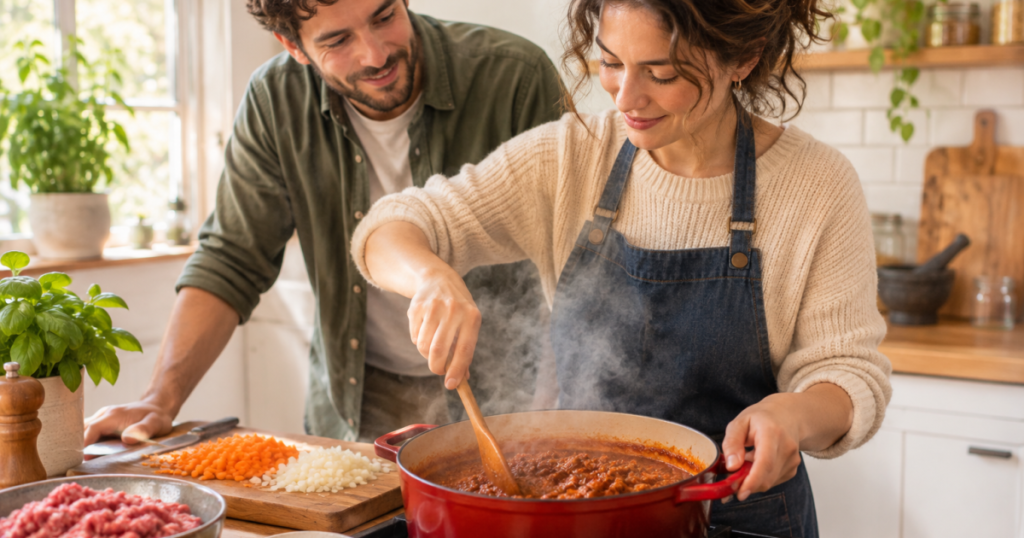
Your first pot of meat sauce should teach your hand what heat feels like, not bury you in rules. A good beginner ragù is built from three visible events: meat browns until it smells roasted, liquid evaporates until the pan sounds sharper, and the finished sauce settles into a slow, lazy simmer. Follow those cues and the clock becomes a helper, not the boss.
What to know first
Ragù is not simply tomato sauce with meat in it. It is a meat-led sauce that uses vegetables, fat, wine or other liquid, tomato, and time to create a texture that clings to pasta instead of sliding off it. For a first batch, the goal is not restaurant drama or strict regional perfection. The goal is to understand the moves that make the sauce taste deep, rounded, and spoon-coating.
The three stages are simple but not interchangeable. Browning builds roasted flavor. Evaporation removes raw-tasting water and alcohol while concentrating sweetness and savoriness. A gentle simmer lets the meat relax into the sauce without turning the pot harsh, dry, or scorched.
If you want the broader story behind why Bologna’s ragù became the reference point for so many meat sauces, the background in Bologna’s tagliatelle al ragù is useful. For cooking tonight, though, keep your attention on the pan.
The pot should sound alive, not angry
Start with a heavy 5- to 6-quart pot or deep sauté pan if you have one. You want enough surface area for moisture to escape and enough depth to keep simmering sauce from spitting everywhere. A thin, crowded pan makes browning harder because meat juices collect faster than they evaporate.
Warm a few tablespoons of olive oil or a mix of oil and butter over medium heat. Add finely diced onion, carrot, and celery with a pinch of salt. This soffritto is ready when the vegetables look glossy and relaxed, smell sweet, and no longer have a raw crunch at the edge. They should not take on hard brown spots. If they sizzle furiously, lower the heat. Sweetness comes from patient softening, not vegetable confetti on fire.
For a first batch, use about 1 to 1 1/2 pounds of ground meat. Beef alone works, while a beef-and-pork blend gives a softer, richer feel. Add the meat in pieces rather than one compact brick. Spread it out and leave it alone for a moment. The urge to stir constantly is the enemy of browning.
Browning: the first real flavor turn
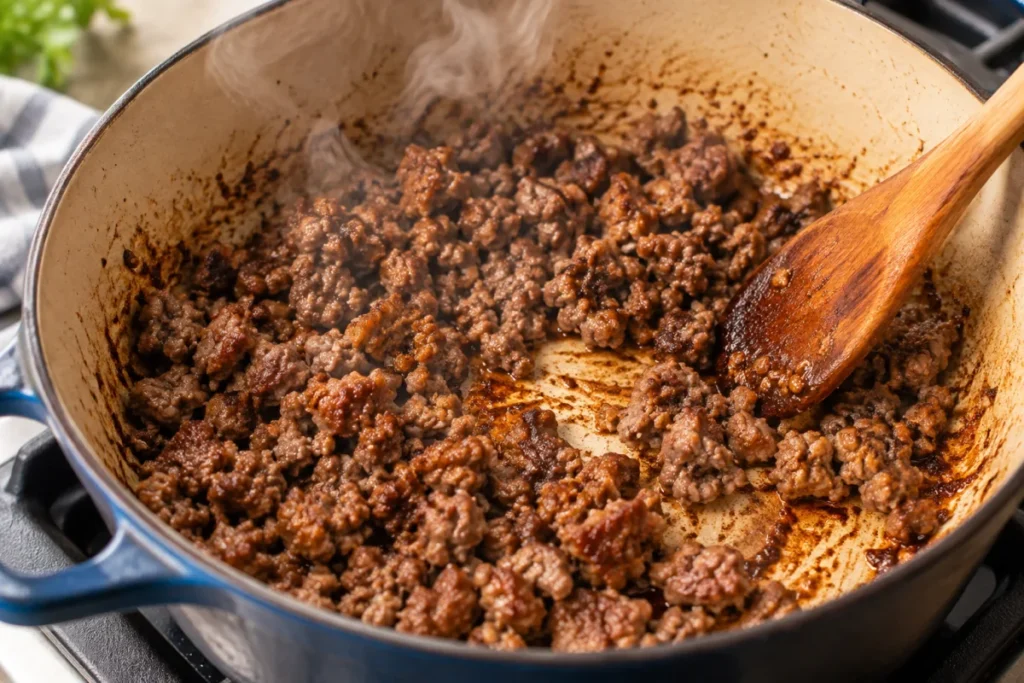
At first, the meat will release liquid. The pan may look disappointing: gray meat, puddled juices, a soft bubbling sound. That is normal. Keep cooking until the liquid mostly disappears and the sound changes from wet bubbling to a clearer sizzle. Now the meat can brown.
Break the meat into small pieces, but do not grind it into dust with the spoon. A ragù feels better when it has tiny tender pieces rather than a uniform paste. Look for browned edges, a nutty roasted aroma, and a light film on the bottom of the pan. That film, often called fond, is flavor waiting to be dissolved.
If the bottom of the pot darkens too quickly, lower the heat and scrape gently. Brown is useful; black is bitter. If you are nervous, add a splash of water and scrape up the fond before continuing. This is not failure. It is heat control.
Evaporation: where thin sauce becomes serious
Once the meat smells roasted, add wine if you are using it. A modest pour, about 1/2 cup, is enough for a small home batch. Red or white can both work, depending on the flavor you want. The important step is reducing it cleanly. Let the wine bubble until the sharp alcoholic smell softens and the pan looks nearly dry again.
This is the stage beginners often rush. If you add tomato while the wine is still sloshing around, the sauce can taste loose and edgy. Evaporation concentrates flavor and clears space for the next ingredient. Watch the pan, not the timer: the liquid should shrink, the bubbles should get thicker, and the spoon should leave a brief trail across the bottom.
Tomato can be paste, crushed tomatoes, passata, or a small amount of canned whole tomatoes broken up by hand. For a meat-forward ragù, tomato supports the sauce rather than turning it into marinara. Tomato paste should be cooked for a minute or two until it darkens slightly and smells less metallic. Canned tomatoes should simmer long enough to lose their bright raw edge.
The gentle simmer is the craft
Add your remaining liquid gradually: a little stock, water, milk, or a combination, depending on the style you are cooking. Milk appears in many Bolognese-style methods because it can soften the impression of the meat and round the sauce, but it is not the only path to a satisfying pot. Traditions vary, and home kitchens adapt. What does not change is the need for a quiet simmer.
A beginner ragù should simmer with small, lazy bubbles that rise here and there, not a rolling boil. The surface may tremble more than bubble. Stir from the bottom every 10 to 15 minutes, more often if your pot runs hot or the sauce thickens quickly. If the sauce starts sticking, add a small splash of water and reduce the heat.
Expect the sauce to look a little separate before it comes together. Fat may bead at the edges. Tomato may seem too bright. Meat may look distinct from the liquid. Over time, the edges soften. The sauce darkens slightly, the aroma becomes rounder, and the spoon comes up coated rather than watery. That is the moment you are cooking toward.
How to know it is ready
A ragù is ready when the meat is tender, the liquid has reduced enough to cling, and the flavor tastes complete before the pasta enters the picture. Drag a spoon through the pot. The sauce should close slowly behind it, not rush back like soup. Press a little meat against the side of the pot. It should feel soft, not rubbery.
Taste for salt near the end, not only at the beginning. As liquid evaporates, salinity concentrates. Add salt in small pinches, then wait a minute before tasting again. If the sauce tastes flat, it may need salt. If it tastes sharp, it may need more simmering or a small amount of fat or dairy to round the edges. If it tastes heavy but dull, a tiny splash of water and a fresh stir can wake it up before serving.
The right vessel helps here, but it does not need to be precious. A Dutch oven, deep sauté pan, or braiser can all work if the size suits your batch and the heat is manageable. If you are trying to match pot shape, capacity, material, and maintenance to the way you cook sauces, the Sauce Pot & Pan Finder is a useful next stop.
Finishing with pasta instead of spooning sauce on top
Cook pasta until just shy of al dente, then move it into a skillet or wide pan with some ragù and a splash of pasta water. Toss over low heat until the sauce grips the pasta. This final minute is where a good sauce becomes a complete dish.
For a first ragù, wide ribbons, rigatoni, pappardelle, or other sturdy shapes are forgiving because they give the meat somewhere to cling. Spaghetti can still be enjoyable, but it asks more from the sauce: the texture needs to be fine enough and glossy enough to coat strands rather than fall to the bottom of the bowl.
Finish with grated cheese if you like, but do not use cheese to hide an under-reduced sauce. The pasta should already look dressed before it gets to the table. Cheese is the final warmth, not structural repair.
Common first-batch problems
The meat turned gray and stayed gray
The pan was probably crowded or not hot enough after the meat released moisture. Keep cooking until the liquid evaporates, or brown the meat in two batches next time. Stir less in the first few minutes so the meat can make real contact with the pan.
The sauce tastes winey
The wine did not reduce enough before the next ingredient went in. Let it bubble until the sharp smell fades and the pan looks almost dry. If the sauce is already assembled, keep simmering gently with the lid off for a while longer.
The bottom is sticking
Some sticking is normal; scorching is not. Lower the heat, scrape with a wooden spoon, and add a splash of water. If you smell bitterness or see black patches, avoid scraping those burnt bits aggressively into the sauce.
The sauce is watery after an hour
Remove the lid or leave it slightly ajar, widen the simmer, and keep cooking gently. Watery ragù usually needs evaporation more than it needs extra tomato paste. Let steam do the work.
Fast answers
How long should a first ragù simmer?
Many home batches start tasting cohesive after about 1 1/2 to 2 hours, but texture is the better guide. The sauce should be glossy, reduced, and tender, with no raw tomato or sharp wine aroma.
Should the lid be on or off?
Use the lid partly ajar if the sauce is drying too fast, and remove it when the sauce is too loose. Lid position is an evaporation control, not a fixed rule.
Do I need milk?
No single ingredient makes the sauce correct. Milk can round the flavor and soften the meat’s impression in many Bolognese-style methods, but careful browning, reduction, and simmering are more important than treating milk as magic.
What to take into your next pot
The first batch teaches you the rhythm: soften, brown, reduce, simmer, taste, adjust. Write down what you used, how long each stage took, and what the sauce felt like at the end. That small record turns a one-off dinner into a house ragù you can improve.
Once you can recognize the sound of moisture leaving the pan and the look of sauce turning glossy, recipes become less intimidating. You are no longer obeying a clock. You are listening to the pot, which is where better sauce begins.
For more technique work, pasta pairing ideas, and sauce troubleshooting, the blog archive is worth browsing before your next long simmer.