
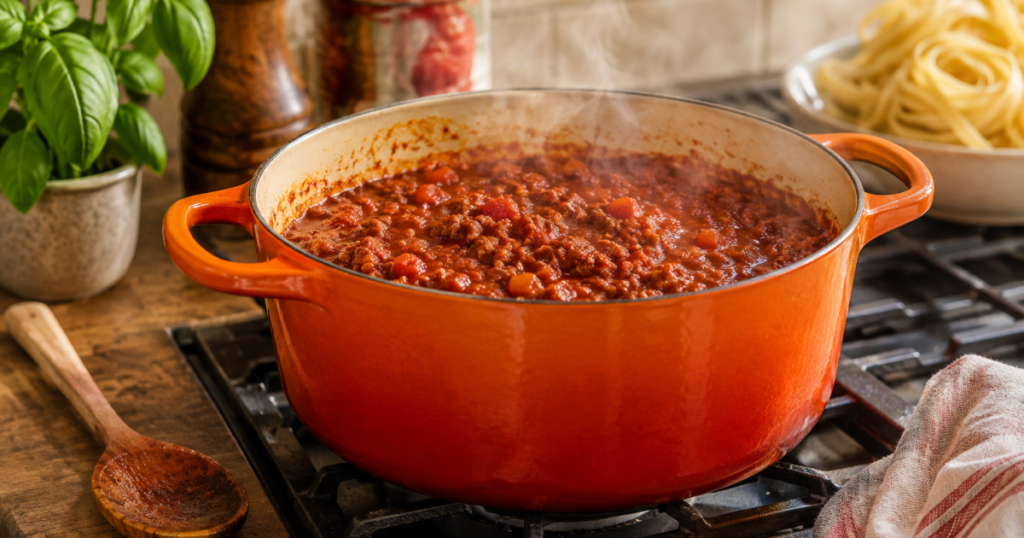
A Le Creuset Signature Enameled Cast Iron Round Dutch Oven 5.5 qt review has to start with the cooking question that matters most here: does this pot make sense for the slow, fragrant, moisture-managed work of a meat sauce? My short answer is yes, if you want a covered enameled cast iron Dutch oven that can move from stovetop simmering to oven use and sit comfortably at the center of a sauce routine.
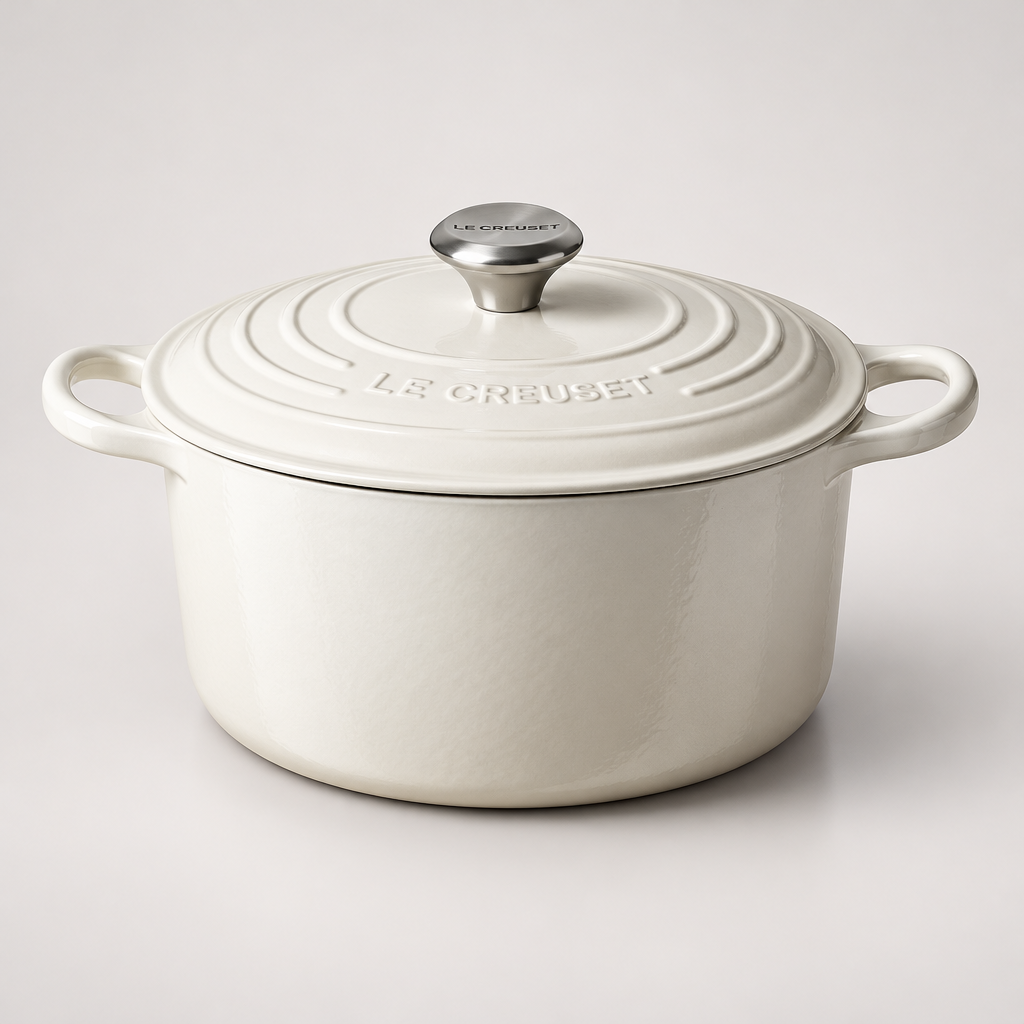
Le Creuset Signature Enameled Cast Iron Round Dutch Oven 5.5 qt
Best for cooks who want a covered, enamel-lined Dutch oven for calm simmering and repeatable sauce batches
The Le Creuset Signature Enameled Cast Iron Round Dutch Oven 5.5 qt is a current Le Creuset Dutch oven in enameled cast iron with a 5.5 qt capacity, included lid, and compatibility across gas, electric coil, smooth electric or glass, and induction stovetops. For a cook who builds ragù from softened soffritto, browned meat, reduced liquids, and a quiet final simmer, those details are not decoration; they shape the whole rhythm of the pot.
Pros & Cons
Pros
- 5.5 qt capacity gives sauce cooks practical room for browning, simmering, and stirring a full batch.
- Enameled cast iron interior suits tomato-rich sauces without bare-cast-iron seasoning maintenance.
- Included lid supports covered simmering and moisture control during long sauce cooking.
- Works on gas, electric coil, smooth electric or glass, and induction stovetops.
Cons
- The 5.5 qt size is less suited to very large batch cooking than a larger vessel.
- Dutch oven shape is less open than a wide sauté pan when rapid evaporation is the priority.
Product Details
- Cookware type: Dutch oven.
- Capacity: 5.5 qt.
- Material: Enameled cast iron.
- Interior surface: Enameled cast iron.
- Lid: Included.
- Oven safe temperature: 500°F.
- Stovetop compatibility: Gas, electric coil, smooth electric or glass, and induction.
- Maintenance level: Dishwasher-safe.
Those specs translate into a pot that feels deliberately substantial before the sauce ever starts. The 5.5 qt body is not a featherweight piece of cookware, especially once it is carrying meat sauce, so the side handles matter in real use. You want both hands on it when moving from burner to oven or from stovetop to trivet, and you want the landing spot cleared before you lift. That weight is part of the appeal, but it is also part of the commitment.
The enamel interior is especially useful for judging sauce color as it develops. Tomato darkening, fat separating at the edges, and browned bits loosening into the liquid are easier to read against a lighter cooking surface than in a dark pan. It also makes scorching easier to catch early: if the sauce starts gripping in one hot patch, you can usually see and feel it with the spoon before it turns bitter.
The 500°F oven-safe rating gives plenty of headroom for sauce-adjacent cooking, but for ragù the more important detail is restraint. This pot rewards low to moderate burner settings, gradual preheating, and patient adjustments. Enameled cast iron does not need to be blasted to perform well; in fact, a gentler hand usually gives you better fond, cleaner reduction, and fewer stubborn cooked-on rings around the sauce line.
Why the 5.5 qt size makes sense for sauce
A 5.5 qt Dutch oven lands in a useful middle zone for bolognese-style cooking. It gives you enough headroom for meat, soffritto, tomato, wine or other liquids, and the bubbling rise that happens before a sauce settles into its steady simmer. That matters because crowding a sauce vessel can make stirring fussy and splattery, while a much larger pot can feel unnecessarily cavernous for an ordinary batch.
For sauce work, capacity is not just about volume. It affects how confidently you can brown, reduce, cover, uncover, and stir without feeling like every movement has to be cautious. A 5.5 qt pot gives a cook room to work through the stages of a ragù without turning the stovetop into a red-speckled crime scene. It is still a round Dutch oven, though, not a broad sauté pan, so cooks who prize fast evaporation over enclosed simmering may prefer a wider profile.
Enameled cast iron and the slow-simmer job
The defining material here is enameled cast iron, with an enameled cast iron interior. For tomato-rich sauces, that enamel interior is the practical draw: it creates a nonreactive cooking surface for acidic ingredients while keeping the cast iron format that many cooks like for long, gentle cooking. You do not need to season the cooking surface the way you would with bare cast iron, which makes the pot feel more approachable for cooks who want to focus on browning, evaporation, and taste rather than pan maintenance rituals.
In a meat sauce, the pot’s job is to support transitions. First the soffritto softens until the kitchen smells sweet and savory. Then the meat loses its rawness and takes on deeper flavor. Liquids reduce. The sauce thickens from splashy to glossy. Enameled cast iron suits that kind of methodical cooking because it encourages patience: moderate heat, regular scraping, and a simmer that looks alive but not frantic.
There is a trade-off built into the Dutch oven format. A covered, deep round pot is excellent for holding a sauce through a long cooking window, but it is not the most open shape for cooks who want maximum surface area. If your house sauce depends on aggressive evaporation or broad-pan browning, a stainless sauté pan can be the more direct tool.
The lid changes how you control texture
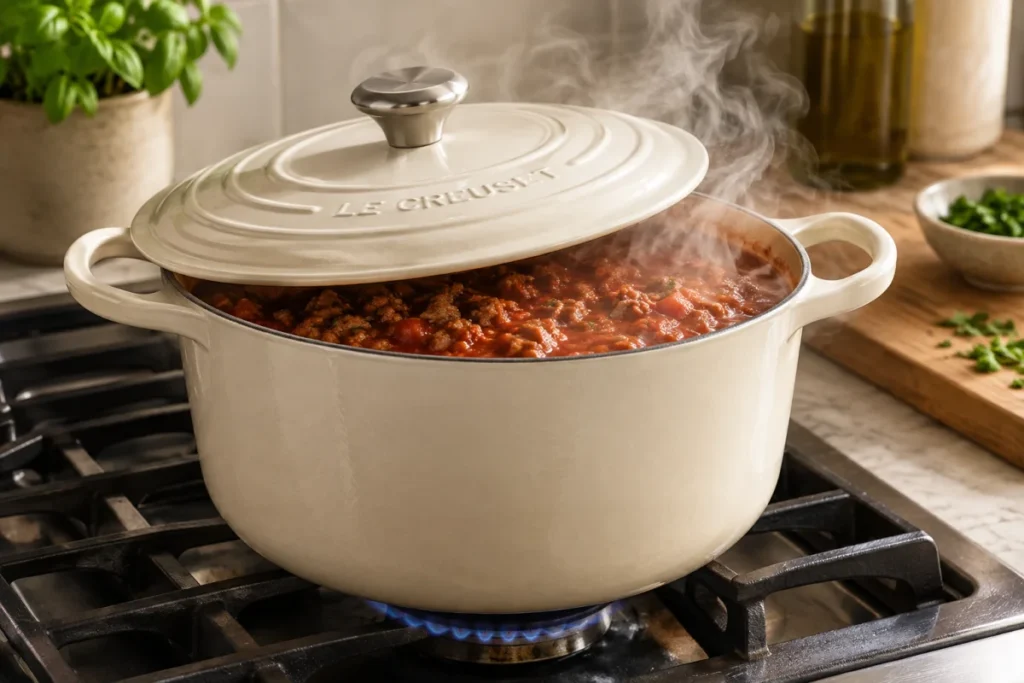
The included lid is more than a storage convenience. In sauce-making, a lid is a texture tool. With the lid on, moisture loss slows and the sauce can settle into a softer simmer. With the lid partly off or off completely, steam escapes and the sauce concentrates. That back-and-forth is how a cook nudges a ragù from loose and separate to cohesive and spoon-coating.
This matters especially when the sauce is not following a perfect clock. Ground meat, tomato thickness, stovetop behavior, and batch size all change evaporation. A lidded Dutch oven gives you a simple lever: trap moisture when the sauce is reducing too quickly, or uncover when the surface looks too wet and the flavor feels diluted. That is the kind of control that makes repeat cooking easier.
Stovetop and oven flexibility
Le Creuset lists this Dutch oven as compatible with gas, electric coil, smooth electric or glass, and induction stovetops. That broad stovetop fit is useful if your cooking life changes: a new range, a rental kitchen, or an induction upgrade does not automatically make the pot obsolete. It also makes the pot easier to recommend across different kitchens without tying it to one burner style.
The 500°F oven-safe rating adds another kind of flexibility. For sauce, oven use can be helpful when you want a steadier enclosed environment after the stovetop stages are finished. It also widens the pot’s role beyond ragù into braises and oven-finished dishes that share the same slow-cooked logic: covered heat, patient reduction, and a sauce that gets better as the ingredients relax into each other.
Cleanup and ownership rhythm
The dishwasher-safe designation keeps maintenance low on paper, and that matters for a pot likely to meet tomato, fat, browned bits, and a long simmer. Even so, the ownership experience is best when you treat the enamel like a cooking surface worth preserving. Let stuck-on sauce soften before scrubbing, use non-abrasive tools, and avoid turning cleanup into a test of strength. A good Dutch oven should invite another batch, not make you dread the sink.
If you are comparing vessels by material, capacity, stovetop fit, and upkeep, the Sauce Pot & Pan Finder is the natural next stop. It is especially helpful when you are deciding whether your sauce routine wants a deep Dutch oven, a braiser, or a sauté pan.
When another pan makes more sense
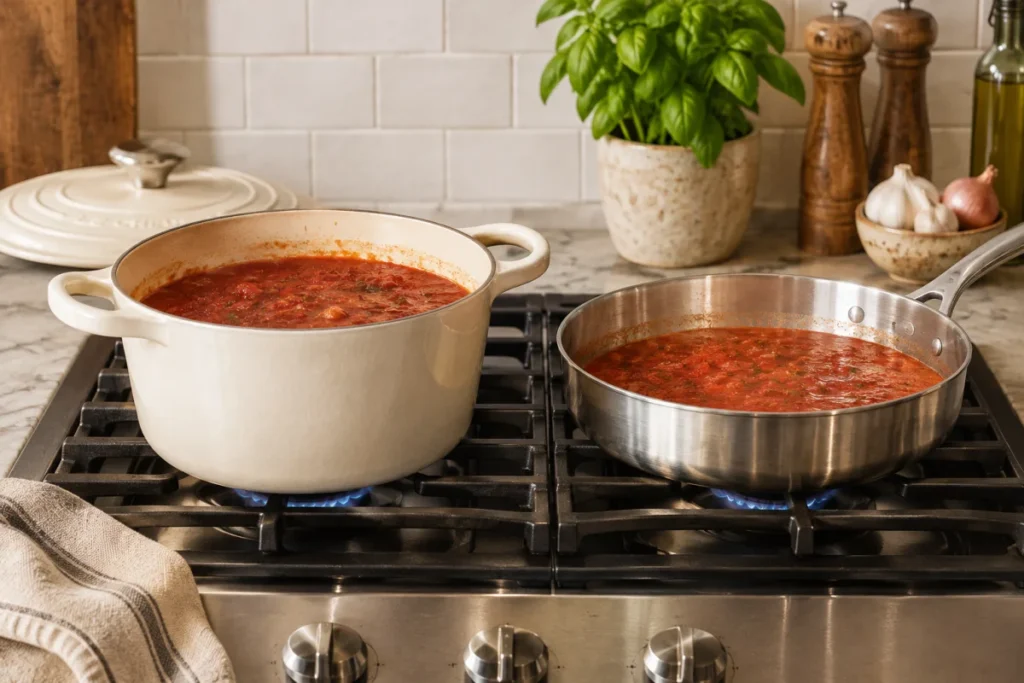
This Le Creuset is strongest for cooks who want a classic enclosed Dutch oven workflow: brown, build, cover, simmer, uncover, reduce, and hold. It is less obviously ideal for someone who wants a very wide base for maximum evaporation or who frequently cooks smaller, quick sauces where a deep 5.5 qt vessel feels more substantial than necessary.
For a more open stainless-steel approach, the All-Clad D3 Stainless 6 Quart Saute Pan is a sensible comparison point because the sauté-pan shape changes the evaporation and browning conversation. That does not make one automatically better. It makes the choice more honest: enclosed simmering and heat-holding Dutch oven logic on one side, wider open-pan reduction on the other.
Verdict
The Le Creuset Signature Enameled Cast Iron Round Dutch Oven 5.5 qt earns its place as a sauce pot because the verified fundamentals line up with real ragù work: 5.5 qt capacity, enameled cast iron construction, an included lid, broad stovetop compatibility, and oven-safe flexibility up to 500°F. Its main limitation is shape-driven rather than quality-driven. If your cooking style favors a wide, fast-reducing pan, this is not the sharpest tool for that job. If your ideal sauce night is slow, fragrant, controlled, and deeply repeatable, it is an excellent fit.
Score: 9.2/10
Le Creuset Signature Enameled Cast Iron Round Dutch Oven 5.5 qt
Best for cooks who want a covered, enamel-lined Dutch oven for calm simmering and repeatable sauce batches
You might also like: Staub 5.5 Qt. Round Cocotte/Dutch Oven.