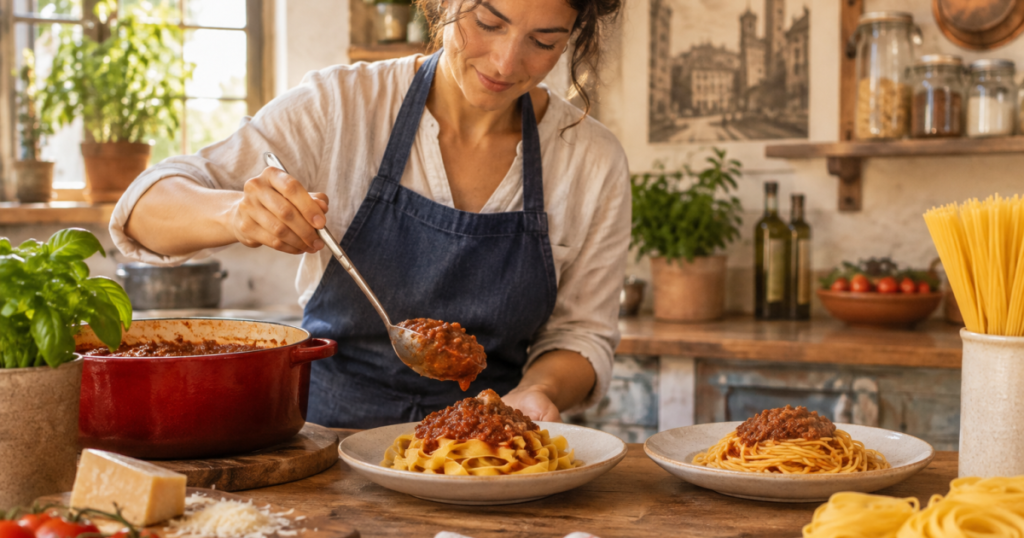
The reason tagliatelle al ragù became the reference point behind a worldwide spaghetti dish is not that Bologna invented every meat sauce, or that spaghetti was somehow wrong from the start. It is that Bologna gave a long-cooked meat sauce a recognizable home: egg pasta wide enough to carry minced meat, a restrained tomato presence, dairy-softened richness, and a culture that treated the sauce as a slow craft rather than a red flood over noodles.
At a glance
- Bologna’s benchmark is a meat-forward ragù served with fresh egg tagliatelle, not a loose tomato sauce poured over thin strands.
- Spaghetti Bolognese grew into an international restaurant and home-cooking dish because dried spaghetti was widely available, familiar, and easy to serve.
- The useful lesson is not to scold the spaghetti bowl. It is to understand why width, texture, fat, and moisture decide whether a meat sauce clings or slides.
The Bologna starting point
Bologna sits in Emilia-Romagna, a region known for egg pasta, pork, dairy, filled pastas, and slow kitchen work that rewards patience. In that setting, ragù alla bolognese developed as a sauce where meat leads and tomato supports. The familiar building blocks are soffritto, minced or finely chopped meat, wine, a little tomato in many versions, milk or dairy in some versions, and enough time for the sharp edges to settle into something plush.
That matters because the sauce is not designed like a bright marinara. A good Bolognese-style ragù should feel integrated: fat carrying aroma, meat softened but still present, sweetness from slowly cooked vegetables, wine cooked down rather than shouting, and tomato tucked into the background. When it is right, it coats with a suede-like drag. It does not behave like a smooth red sauce.
Tagliatelle is the classic partner because it solves a physical problem. Wide ribbons give the sauce surface area. Fresh egg pasta brings a tender bite and a slightly porous feel. The ragù can settle along the folds and edges instead of dropping to the bottom of the bowl. pasta shape is not decoration here; it is part of the sauce system.
How the documented reference shaped the story
Bologna’s claim became stronger because the dish was written down, taught, argued over, and attached to named institutions and local practice. A well-known reference recipe for ragù alla bolognese was registered with the Bologna Chamber of Commerce in the twentieth century, and later discussions have acknowledged permitted variations rather than pretending every household uses one frozen formula.
That is the sane way to read tradition. The documented version gives cooks a center of gravity: meat before tomato, slow reduction before simmering, dairy as a softening element in many versions, and pasta that can actually hold the sauce. Around that center, families and cooks make choices. Some use beef alone; others include pork or pancetta. Some keep tomato very modest; others lean a little redder. The practical question is always the same: does the finished sauce taste deep, cohesive, and carried by the pasta?
Why spaghetti entered the picture
The global dish called spaghetti Bolognese did not spread because it was a perfect copy of Bologna’s table. It spread because it was adaptable. Dried spaghetti was easy to buy, store, cook, and recognize. Outside Italy, restaurants and home cooks often translated unfamiliar regional sauces through pasta shapes they already knew. A meat sauce from Bologna became, in many places, a generous tomato-meat sauce served over spaghetti.
That international version developed its own comfort-food identity. It fed families. It worked in weeknight kitchens. It became a cafeteria, pub, diner, and home staple. But it also blurred the original mechanics. Thin spaghetti can carry oil, garlic, clam sauce, carbonara, and tomato sauces beautifully, but a chunky meat ragù asks more of the noodle. Unless the sauce is reduced carefully and finished with the pasta, bits of meat tend to fall away while the strands slide through.
This is where the history becomes useful rather than fussy. The Bologna reference does not require you to throw out every spaghetti memory. It teaches you why some bowls taste integrated and others taste like pasta with meat gravel at the bottom.
The sauce mechanics hidden inside the history
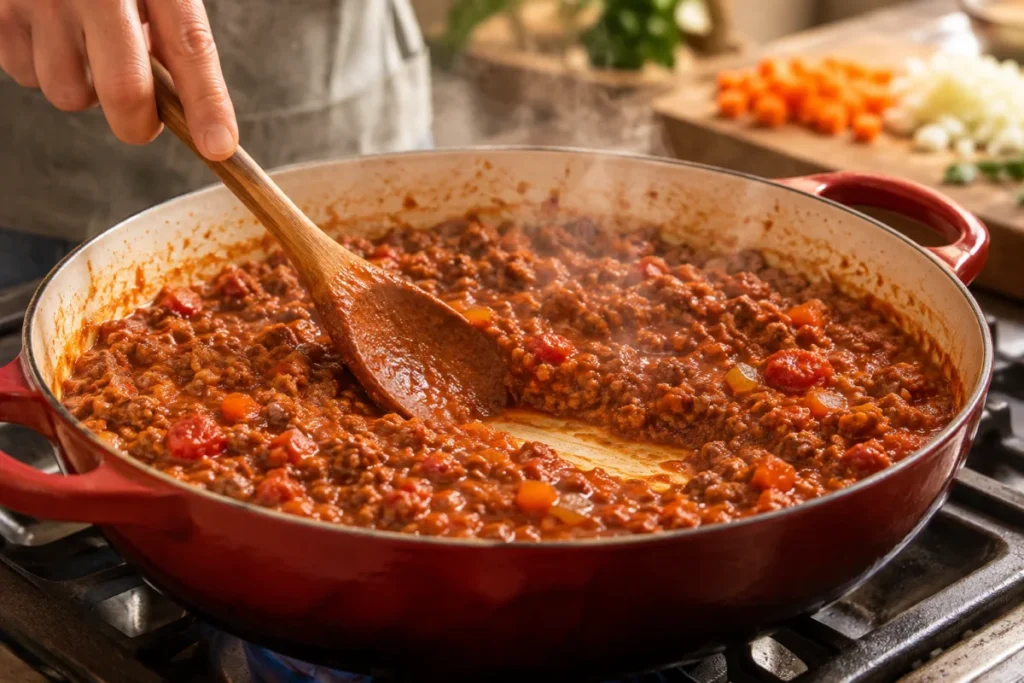
If you cook Bolognese-style sauce at home, the old pairing points toward better technique. The first move is evaporation. Soffritto should soften until sweet and fragrant, not stay crunchy under the meat. Meat should lose rawness and develop savory depth before the liquid stage. Wine should reduce until its harsh alcohol edge disappears. Tomato should join the sauce, not drown it.
Then comes the simmer. A ragù needs gentle bubbling, not aggressive boiling. You are coaxing water away while fat, protein, vegetables, and dairy settle into one another. The pot should look calmer as time passes: less foamy, less separate, more glossy. If the sauce tastes flat, it may need salt, more reduction, or time. If it tastes sharp, the wine or tomato may not have softened enough. If it feels greasy, it may need a little moisture and patient stirring to come back together.
The pan changes that workflow. A wide sauté pan encourages faster evaporation; a Dutch oven holds heat steadily and is forgiving during a longer simmer. If your own sauce tends to stay watery or scorch at the edges, the vessel may be part of the answer. The Sauce Pot & Pan Finder is useful when you want to compare shape, capacity, material, and maintenance without treating every pot as if it cooks ragù the same way.
What the classic pairing teaches about pasta choice
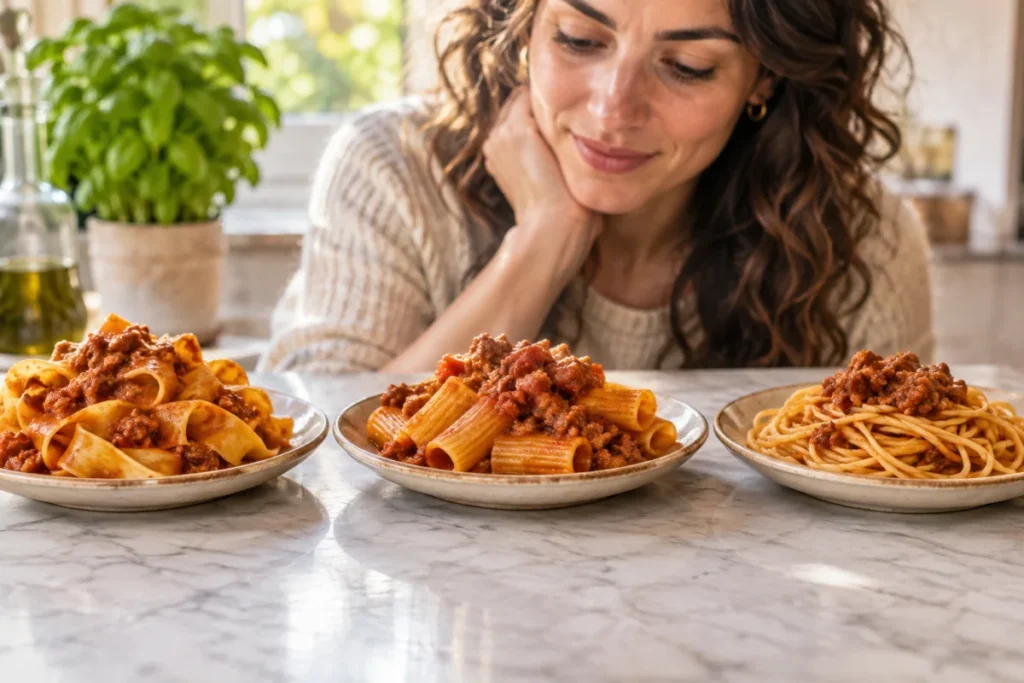
For a Bolognese-style ragù, pasta should do three jobs: offer enough surface, give the meat somewhere to sit, and keep its bite after finishing in the sauce. Fresh tagliatelle is the obvious reference, but it is not the only workable option in a home kitchen.
- Fresh tagliatelle: the benchmark for a tender, luxurious plate where the sauce clings to broad ribbons.
- Pappardelle: wider and more dramatic, good when the ragù is rich and slightly looser.
- Rigatoni or mezzi rigatoni: practical for a chunkier sauce because tubes and ridges trap meat well.
- Spaghetti: best when the sauce is finely textured, well reduced, and finished with pasta water so it grips rather than slides.
The finishing step matters as much as the shape. Move pasta into the sauce before serving, add a splash of starchy cooking water, and toss until the surface looks coated. The plate should not look like plain pasta wearing a ladle of sauce as a hat. It should look married.
When cookware becomes part of the tradition
Old dishes survive partly because their method is repeatable. For ragù, repeatability comes from controlling heat and evaporation. Heavy enameled cast iron suits cooks who like a steady, enclosed simmer. Stainless sauté pans suit cooks who want quicker reduction and more visual control. Neither is automatically more authentic; each changes how you manage moisture.
If you are curious about that heavier, slow-simmer style, this enameled cast iron Dutch oven review looks at the kind of pot many sauce cooks consider for long ragù work. The important point is not the brand name. It is matching the vessel to the way you actually cook: batch size, stovetop behavior, cleanup patience, and whether you prefer slow concentration or faster evaporation.
Main lessons
Bologna’s famous meat sauce became the reference point because it joined place, method, and pasta geometry. The city’s ragù was not just a flavor; it was a way of building sauce so meat, fat, wine, tomato, dairy, and time became one thing. Tagliatelle made that work visible on the plate.
Spaghetti Bolognese, meanwhile, became worldwide because cooks adapt. They use the pasta they know, the ingredients they can buy, and the meal structure that fits their table. That adaptation is not a culinary crime. It is simply a different branch of the same story.
The better home-cook move is to borrow the lesson from Bologna: reduce patiently, keep the tomato in proportion to the meat, choose pasta with enough carrying power, and finish the pasta in the sauce. Do that, and even a familiar weeknight bowl starts to taste more intentional.
Read next
For more sauce technique, pasta pairing, and cookware notes, browse the latest Bolognese cooking articles. The best next bowl usually starts with one small correction: a wider noodle, a calmer simmer, or five more minutes of tossing until the sauce finally clings.
Use your last batch as the clue for what to read next. If the sauce tasted thin even after a long simmer, focus on evaporation, pan width, and when to leave the lid off. If the meat felt dry or pebbly, look at fat balance, grind size, and whether the sauce simmered too hard. If the flavor was big but the bowl still felt disconnected, the problem may be the final toss rather than the ragù itself.
- Watery sauce: study reduction and cookware shape before changing the recipe.
- Greasy sauce: look at heat control, stirring rhythm, and how much pasta water you add at the end.
- Flat flavor: check salt timing, wine reduction, and whether the soffritto cooked long enough to smell sweet.
- Poor cling: compare pasta shapes, surface texture, and the length of the finishing toss.
A good next step is to change only one variable per cook. Switch from spaghetti to tagliatelle, but keep the sauce method the same. Use a wider pan, but keep the same meat blend. Simmer 30 minutes longer, but do not also double the tomato. That kind of small, almost obsessive testing teaches more than chasing a brand-new recipe every time the bowl disappoints.
Pay attention to the sensory signs as you go. The sauce should move from loud and separate to quiet and glossy. The spoon should leave a slow path through the ragù before the sauce gently fills back in. When pasta enters the pan, the coating should tighten around it instead of pooling underneath it. Those details are where the old Bologna lesson becomes practical in a modern kitchen: sauce is not finished when it is merely cooked; it is finished when it knows how to hold on.